
Garage Door Spring and Cable Safety: What You Can Touch, and What You Never Should
If you just heard a loud bang from the garage, or you spotted a frayed cable hanging near the bottom of the door, stop before you touch anything. Springs and cables are the two parts of a garage door that store real, concentrated force, and they are the parts most often involved in serious home-repair injuries. This guide explains where that force lives, what professionals use to control it, and exactly where the safe homeowner boundary sits. The short version: observe and report, never unbolt.
Request Service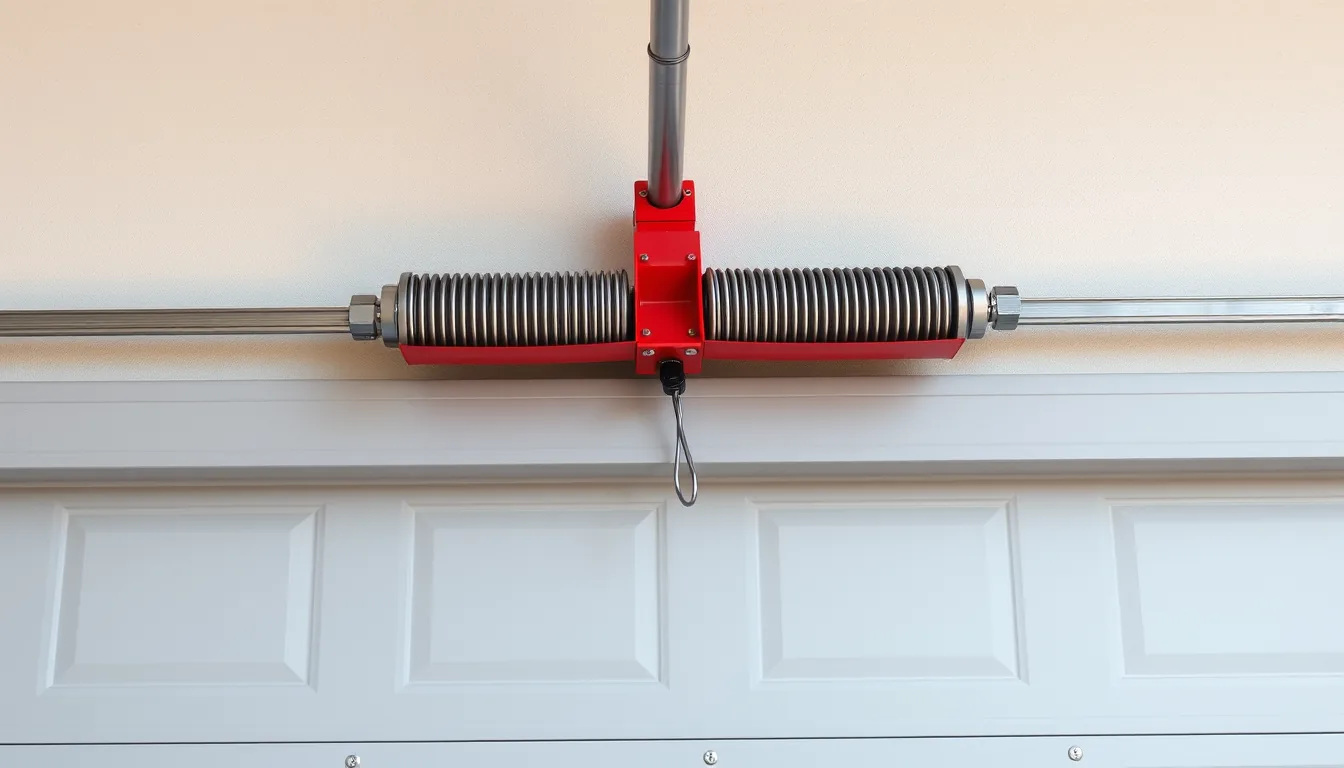
The First Ten Minutes After the Bang
A sudden gunshot-like bang from the garage is the classic sound of a torsion spring breaking. The spring usually fails while the door is closed and the coil is holding its maximum wind, and the noise is the stored energy releasing all at once inside the coil. Here is what matters in the first ten minutes:
- Leave the door in whatever position it is in. Up, down, or partly open — do not try to move it.
- Do not press the opener button. An opener straining against a dead spring can strip its drive gear or bend the top door section.
- Do not pull the red emergency release cord if the door is open. With a broken spring, the opener trolley may be the only thing holding the door up. Releasing it can let the full weight fall.
- Keep children, pets, and vehicles out of the doorway, then photograph the spring and cables from a safe distance for your service request.
Waiting is not neutral, either. On a two-spring door, the surviving spring now carries a load it was never sized for, and it often fails soon after the first. Describe what you see and submit a service request through the form on our contact page so a technician can take it from there.
How Much Energy a Wound Spring Is Really Holding
A garage door does not feel heavy when it works because it is counterbalanced. A typical insulated double-car steel door weighs roughly 150 to 300 pounds, and every bit of the force needed to lift that weight is stored in the springs before you ever touch the door.
Torsion springs sit on a steel shaft above the door opening. To balance a standard 7-foot door, a technician winds the spring about seven and a half full turns and locks that twist in with set screws on the winding cone. The coil then holds that torque continuously — for years — until it is unwound in a controlled way or the steel fatigues and snaps. Most standard torsion springs are rated for about 10,000 open-close cycles, which is why an older door can fail with no warning at all.
Extension springs work differently: one runs above each horizontal track and stretches as the door closes. A stretched extension spring that breaks without a safety cable threaded through it can whip across the garage, which is why safety cables are a standard requirement on this design.
Lift cables are wound-steel aircraft-type cable running from the bottom corner brackets of the door up to drums on the torsion shaft. They carry the same load the springs do. A cable that is rusted or fraying near the bottom bracket is a failure in progress, not a cosmetic issue.
Winding Bars: Why Pros Use a Purpose-Made Tool
Torsion springs are wound and unwound with winding bars — solid steel rods, commonly about 18 inches long and half an inch in diameter, machined to fit snugly into the holes on the spring's winding cone. The fit is the whole point. A properly seated bar cannot slip out of the cone while the spring's torque is loaded onto it, and the bar's length gives the technician enough leverage to hold that torque with control while working.
The improvised substitutes people reach for — screwdrivers, pliers handles, rebar, hex keys — are the wrong diameter, the wrong hardness, or both. They slip out of the cone or bend under load, and the moment they do, the cone spins with all of the spring's stored energy behind it. That is not a reason to buy winding bars and try it yourself. It is the reason this page will not give winding instructions at all: the tool only makes the job survivable for someone trained to sequence every step of it.
The Injuries That Actually Happen
Garage door spring and cable injuries are a documented category in emergency-medicine and consumer-safety literature, and they follow repeatable patterns:
- Struck by a released bar or cone — fractures and deep lacerations to hands, forearms, and the face when an improvised winding tool slips.
- Fingertip crush and amputation — fingers caught at cable drums, in the moving cable, or in the pinch points between door sections.
- Falls — a spring or bracket lets go while someone is on a ladder at the torsion shaft, and the fall injures more than the release does.
- Struck by the door — a door with a failed spring or released opener falling onto a person below it.
Notice what these have in common: almost every one happens while someone is loosening, unbolting, or leaning over a component that is still under load.
Your Boundary: Observe and Report
There is real, useful work a homeowner can do safely — none of it involves a wrench.
- Safe: Look for a visible gap of about two inches in the torsion spring coil (the signature of a clean break). Check cables for rust, kinks, or fraying near the bottom brackets. Confirm extension springs have safety cables through them. Listen for grinding or popping. Photograph everything from the floor.
- Never: Unbolt the bottom corner brackets — they anchor the lift cables and are under tension even when the door looks at rest. Never loosen set screws on winding cones or cable drums, unhook a stretched extension spring, or remove the lag screws holding the spring anchor plate to the header.
The rule is simple enough to remember under stress: if a part connects to a spring or a cable, it is not a homeowner part. Write down what you observed, attach your photos, and submit a service request through the form on our contact page. A technician can assess whether you need a spring replacement, new cables, or related hardware, and repair needs vary by door weight, track height, and spring type.
Frequently Asked Questions
My spring broke while the door was open. Can I pull the red release cord to get the door down?
No. With a broken spring, the opener trolley may be the only thing holding 150 to 300 pounds of door in the air. Pulling the release disconnects that hold, and the door can fall with nothing to slow it. Leave the door where it is, keep the doorway clear, and describe the situation in your service request so the technician arrives prepared to lower it safely.
My extension springs have nothing running through the middle of the coils. Is that a problem?
Yes, and it is worth reporting even if the door still works. That missing piece is a safety cable — a steel line threaded through each extension spring so that if the spring snaps, the broken halves are contained instead of whipping across the garage. Adding safety cables is a standard, inexpensive fix a technician can handle during any service visit, so mention it on your request form.