
Opener or Door Problem? The One-Minute Release-Cord Test
Your garage door will not move, and the natural reaction is to keep pressing the button. Stop after the second press. A one-minute test with the red manual release cord tells you whether the fault is the opener or the door hardware, and what you do in the first ten minutes often decides whether you end up with one repair or three.
Request Service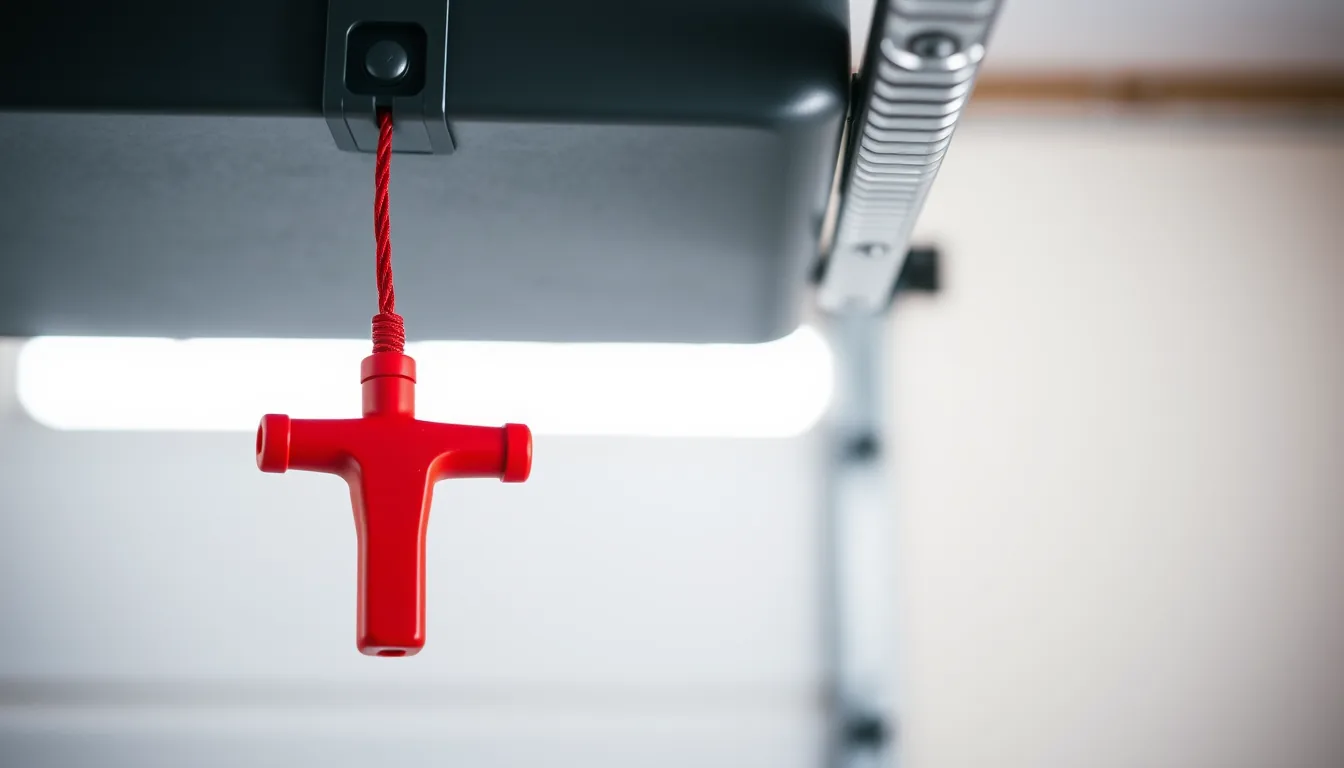
First Ten Minutes: Take Your Finger Off the Button
When a door refuses to move, every extra press of the wall button forces the opener against something that is stuck. Most chain-drive openers turn the chain with a main drive gear made of nylon, and grinding it against a jammed door strips the teeth. The opener arm bolts to the door's top section, so all of the motor's pulling force lands on that one spot. That concentrated load makes the top section the door's weakest point under opener force — it is the reason reinforcement struts and wide operator brackets exist — and repeated force there can bend the panel.
Press twice at most. If the door does not respond normally, stop using the opener and run the test below instead.
The One-Minute Test
Do this only with the door fully closed. Pull the red T-handle cord that hangs from the opener rail. It releases the trolley carriage and disconnects the door from the motor. Now lift the door by hand from the bottom edge.
A healthy door feels surprisingly light, because the torsion or extension springs carry almost all of its weight. A double-wide steel door often weighs 150 pounds or more, yet a balanced one lifts with roughly ten pounds of effort and holds still at waist height when you let go.
Never pull the release while the door is open or partway up. If a spring or cable has failed, the opener may be the only thing holding the door, and releasing it can let the door slam down.
Lifts Smooth and Light? Suspect the Opener
If the door glides up, balances, and rolls back down under control, the springs, cables, and tracks are doing their jobs. Work through the opener side:
- Photo-eye sensors. The small lenses about six inches off the floor must face each other with steady indicator lights. A cobweb, a bumped bracket, or low sun glare can make the door reverse. Cleaning the lenses and realigning the brackets is safe to do yourself.
- Motor hums but nothing moves. That points to a stripped drive gear or a worn trolley carriage inside the opener.
- No response at all. Check the outlet and the remote batteries first, then suspect the logic board.
Describe the exact symptom in your service request; it tells the technician which parts to expect before arriving.
Heavy, Stuck, or Crooked? The Door Hardware Failed
If you can barely budge the door, a spring has almost certainly broken. A snapped torsion spring shows a visible two-inch gap in the coil on the shaft above the door, usually after a single loud bang. If the door rises crooked or one side hangs low, a lifting cable has frayed or jumped off its drum. If it moves and then jams at the same spot every time, look for a bent track or a failed roller.
Do not touch the springs, cables, winding cones, or bottom brackets. These parts hold the stored force needed to lift the full weight of the door, and they cause serious injuries when they let go. Leave the door closed and disconnected, and request a technician instead.
Why Forcing a Bad Door Multiplies the Damage
An opener is built to guide a balanced door, not to lift dead weight. When the springs are doing their work, the motor only moves a few pounds. Reconnect the trolley and drive a spring-broken door anyway, and the failures stack: the drive gear strips, the top panel bends where the arm pulls on it, and the remaining cable can be dragged off its drum, leaving the door cocked in the tracks.
One broken spring is one repair. A forced door can turn it into a spring, a panel, a cable, and an opener repair in the same visit. Submit a service request through the contact form, note which branch of the test you landed on, and a technician can take it from there.
Frequently Asked Questions
Can I pull the red release cord while the door is stuck halfway open?
No. Only pull the release when the door is fully closed. The cord disconnects the door from the opener, and if a spring or cable has failed, nothing else is holding the door up. It can fall with its full weight. If your door is stuck partway open, keep people and vehicles clear and submit a service request describing exactly where it stopped.
My door passed the lift test, but the opener hums and nothing moves. What broke?
A hum means the motor runs but the drive is not turning the trolley. On many chain-drive openers the main drive gear is nylon, and when it strips it leaves fine white shavings inside the motor housing. A worn trolley carriage causes the same symptom. Either way it is an opener-side repair, and your springs and cables passed their part of the test.